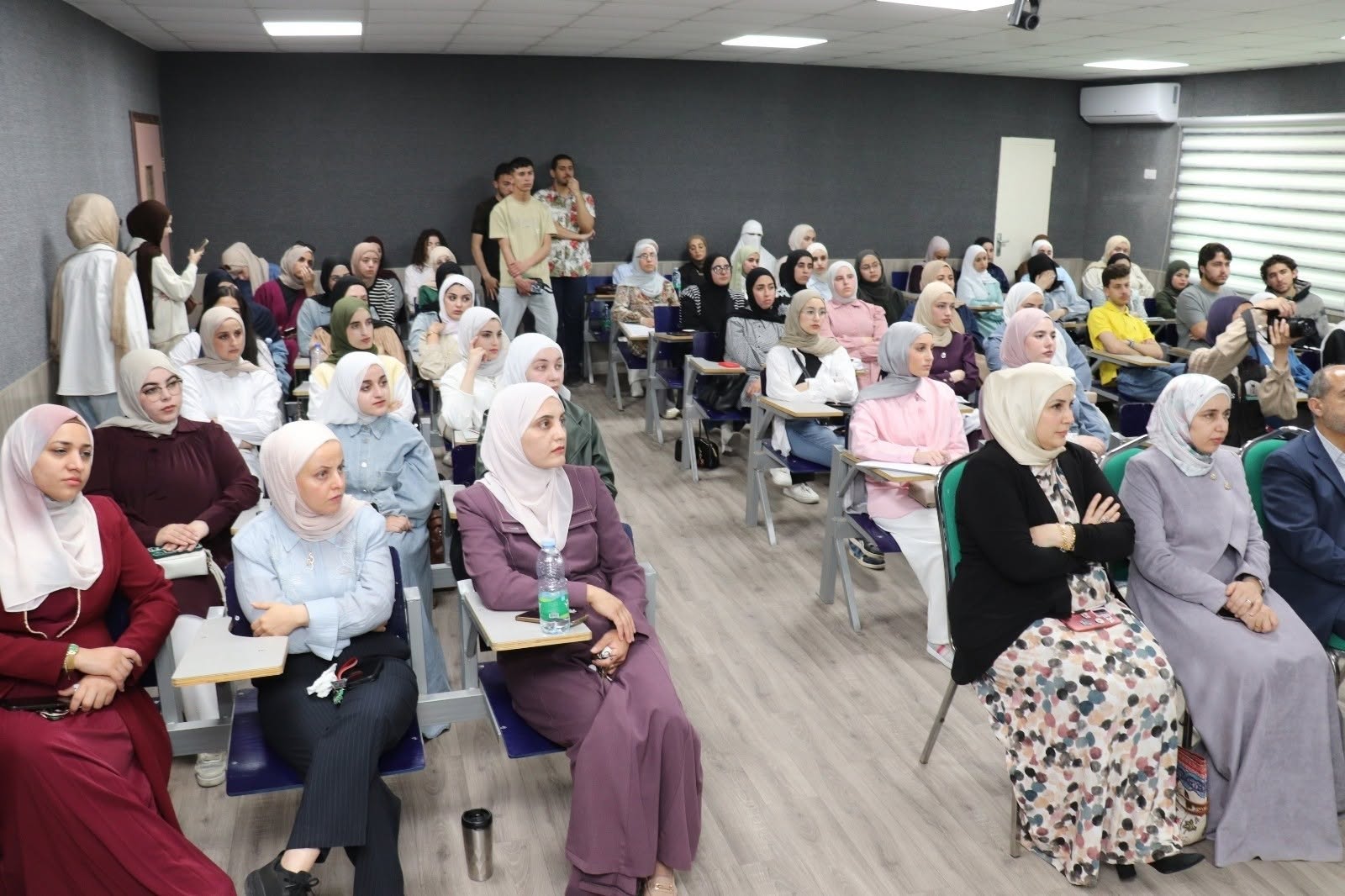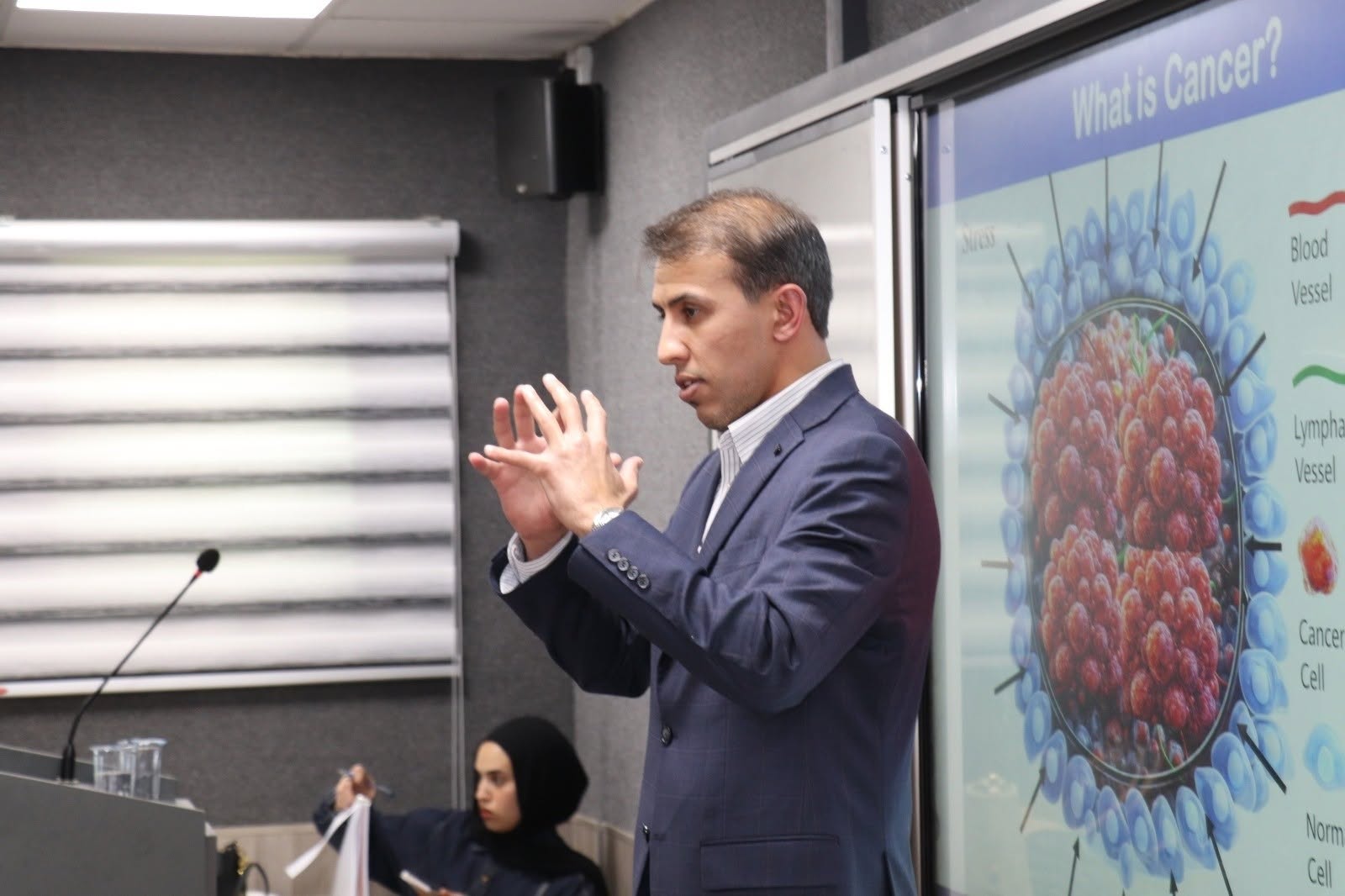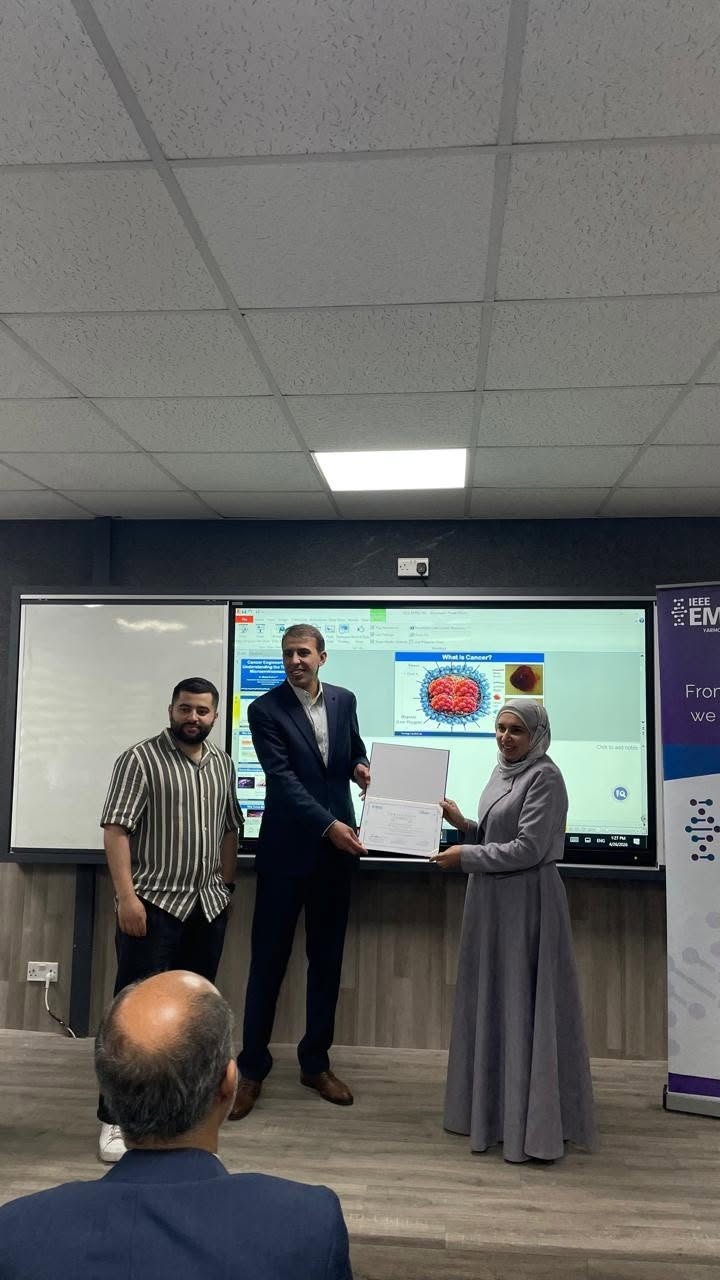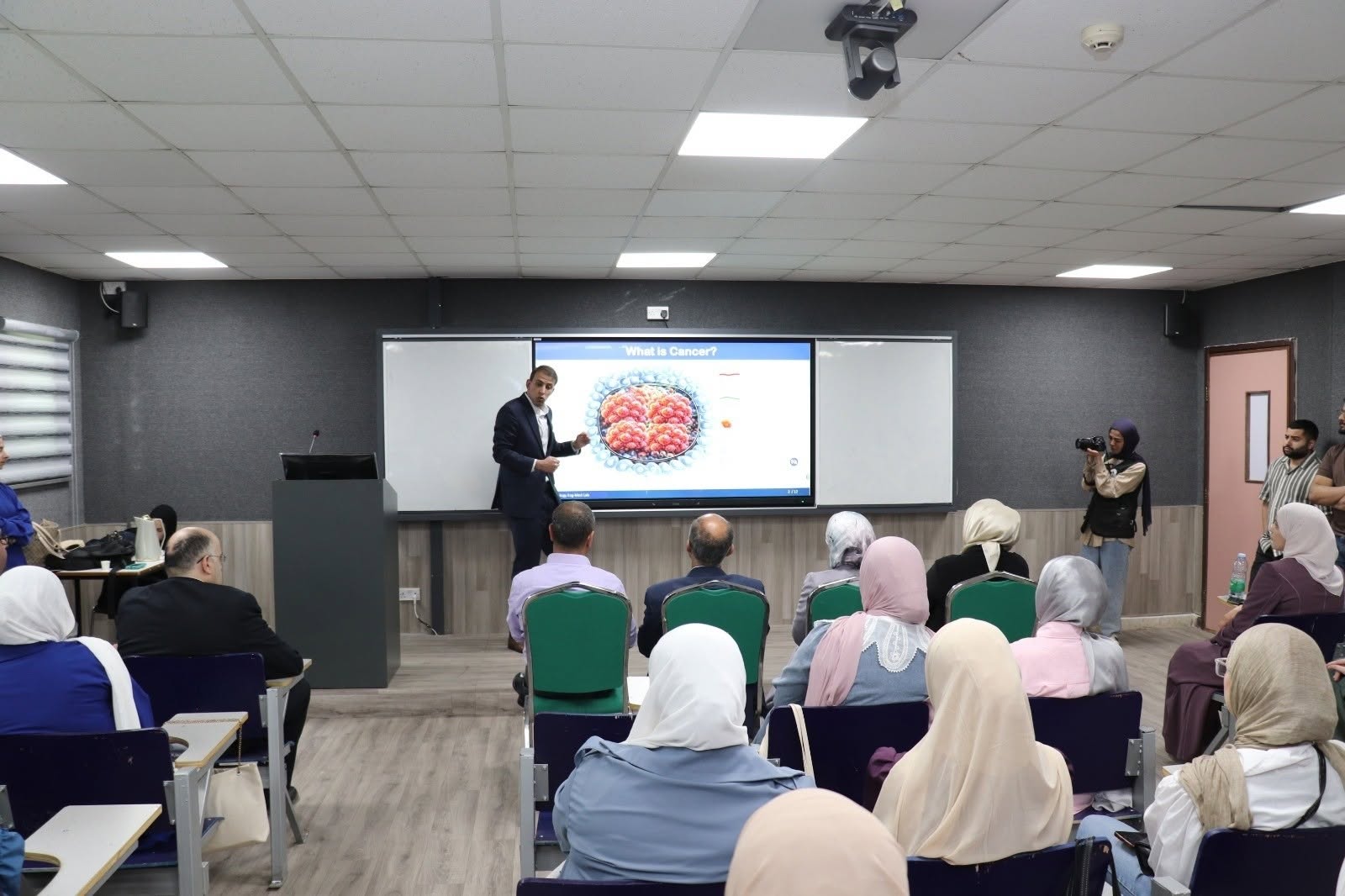
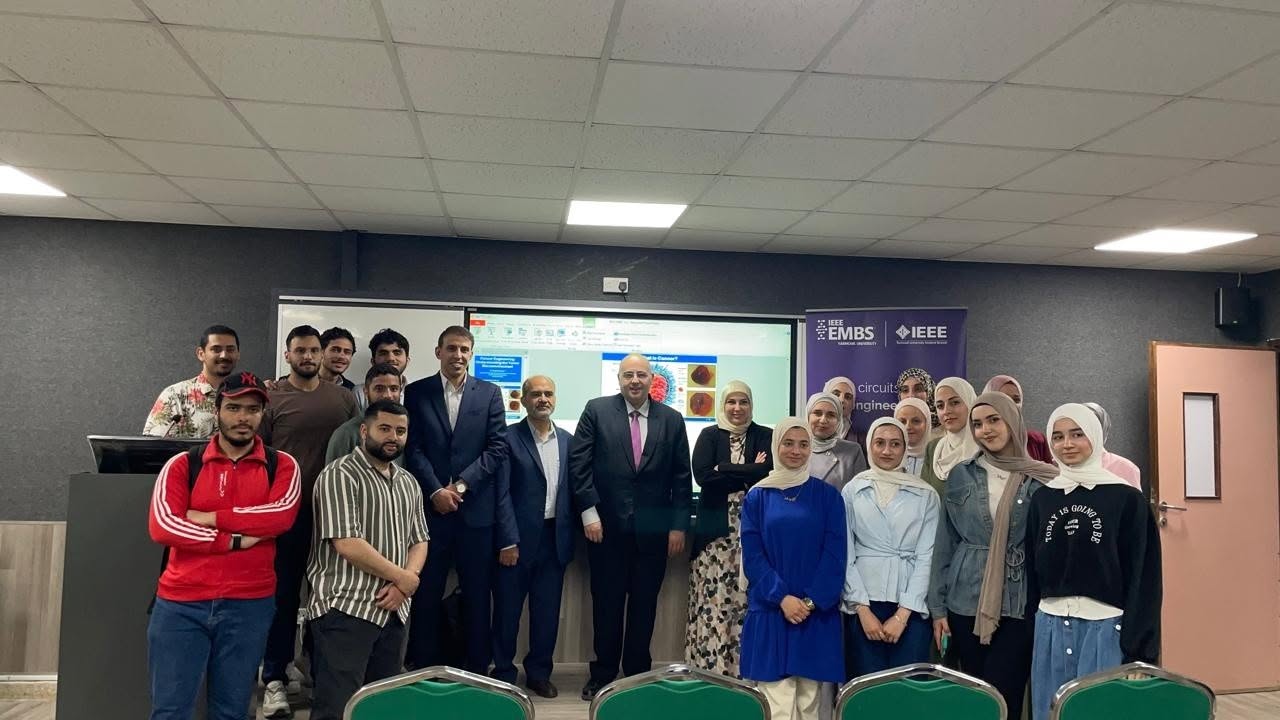
The IEEE EMBS team at Al-Hijjawi Faculty of Engineering Technology organized a scientific workshop titled "Cancer Engineering: Understanding the Tumor Microenvironment," presented by Dr. Mu'taz Al-Duwairi. The workshop was well-attended by faculty members and students from the Faculties of Engineering, Medicine, Pharmacy, and Science at Yarmouk University.
The workshop addressed the concept of the tumor microenvironment and its role in the growth and spread of cancer cells, as well as its impact on treatment response. It also reviewed the latest trends in cancer engineering and modern technologies that contribute to improving diagnostic and treatment methods.
Dr. Al-Duwairi discussed his most prominent recent research in this field, highlighting innovative methods for studying the interaction of cancer cells with their surrounding environment and how this knowledge can be applied to designing treatment strategies.
The workshop was characterized by a highly interactive atmosphere, featuring valuable scientific discussions and broad participation from students and faculty members. This contributed to enriching the scientific dialogue and enhancing the exchange of expertise among the participants. For her part, Dr. Atik Khader, supervisor of the IEEE EMBS team, stressed the importance of these events in promoting integration between engineering and medical sciences, and opening up scientific research prospects for students, in line with global developments in this vital field.
The workshop addressed the concept of the tumor microenvironment and its role in the growth and spread of cancer cells, as well as its impact on treatment response. It also reviewed the latest trends in cancer engineering and modern technologies that contribute to improving diagnostic and treatment methods.
Dr. Al-Duwairi discussed his most prominent recent research in this field, highlighting innovative methods for studying the interaction of cancer cells with their surrounding environment and how this knowledge can be applied to designing treatment strategies.
The workshop was characterized by a highly interactive atmosphere, featuring valuable scientific discussions and broad participation from students and faculty members. This contributed to enriching the scientific dialogue and enhancing the exchange of expertise among the participants. For her part, Dr. Atik Khader, supervisor of the IEEE EMBS team, stressed the importance of these events in promoting integration between engineering and medical sciences, and opening up scientific research prospects for students, in line with global developments in this vital field.